Growth design insights
Last Update: April 23, 2026
.png)
When you're ready to hire a designer, one of the first questions you'll face is: how should I pay for this? The pricing model affects your budget predictability, the quality of work, and even how the relationship feels. Here's an honest breakdown of all three models — so you can make a smarter choice.
Most design services fall into one of four models. Each comes with a different set of trade-offs depending on where your business is and what you actually need.
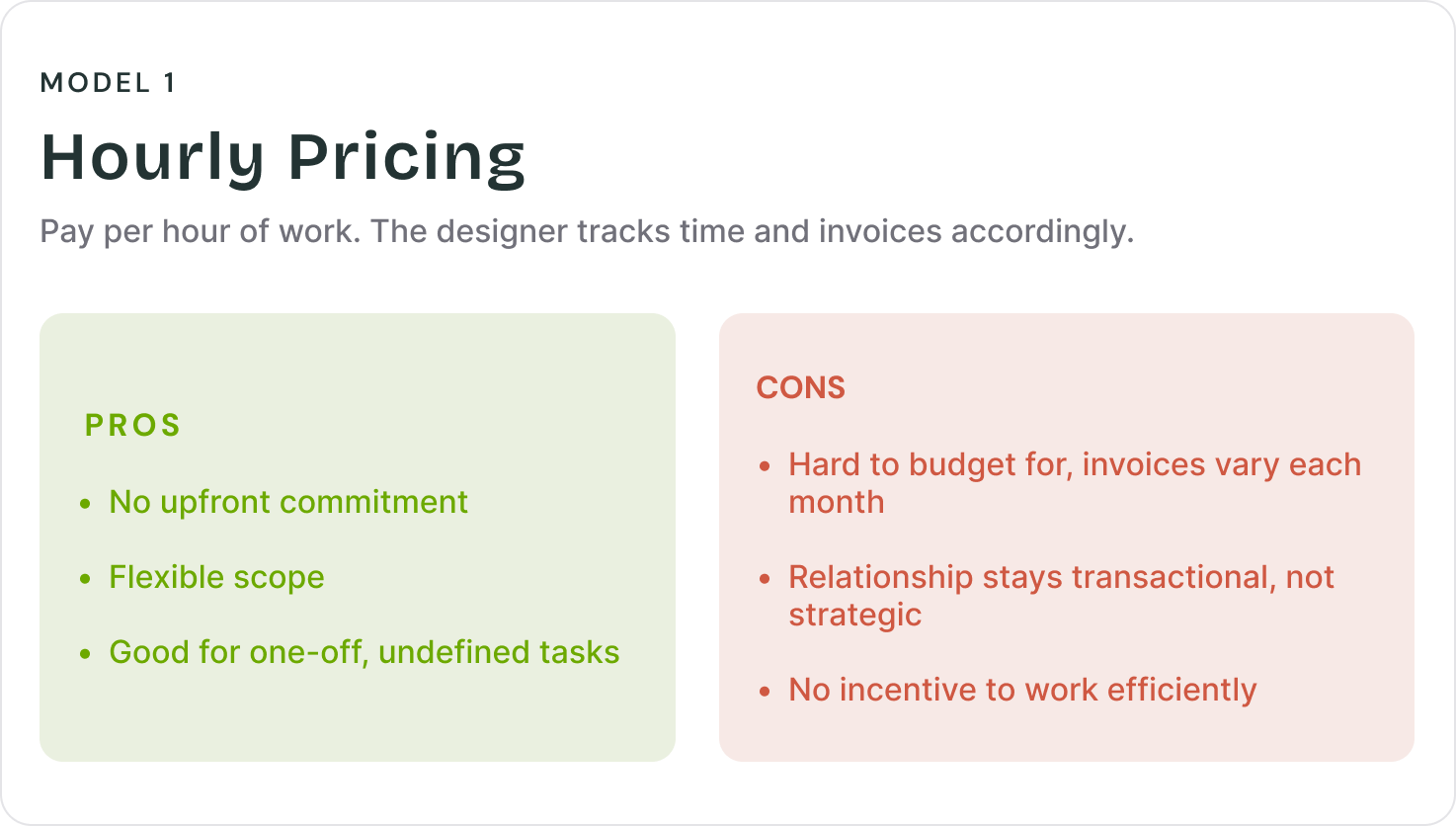
Hourly pricing works when you genuinely don't know how much work is involved, like a quick consultation or a one-off small job, but for anything long term, it creates tension: you're watching the clock, and the designer is tracking every minute. That's not a great foundation for creative work.
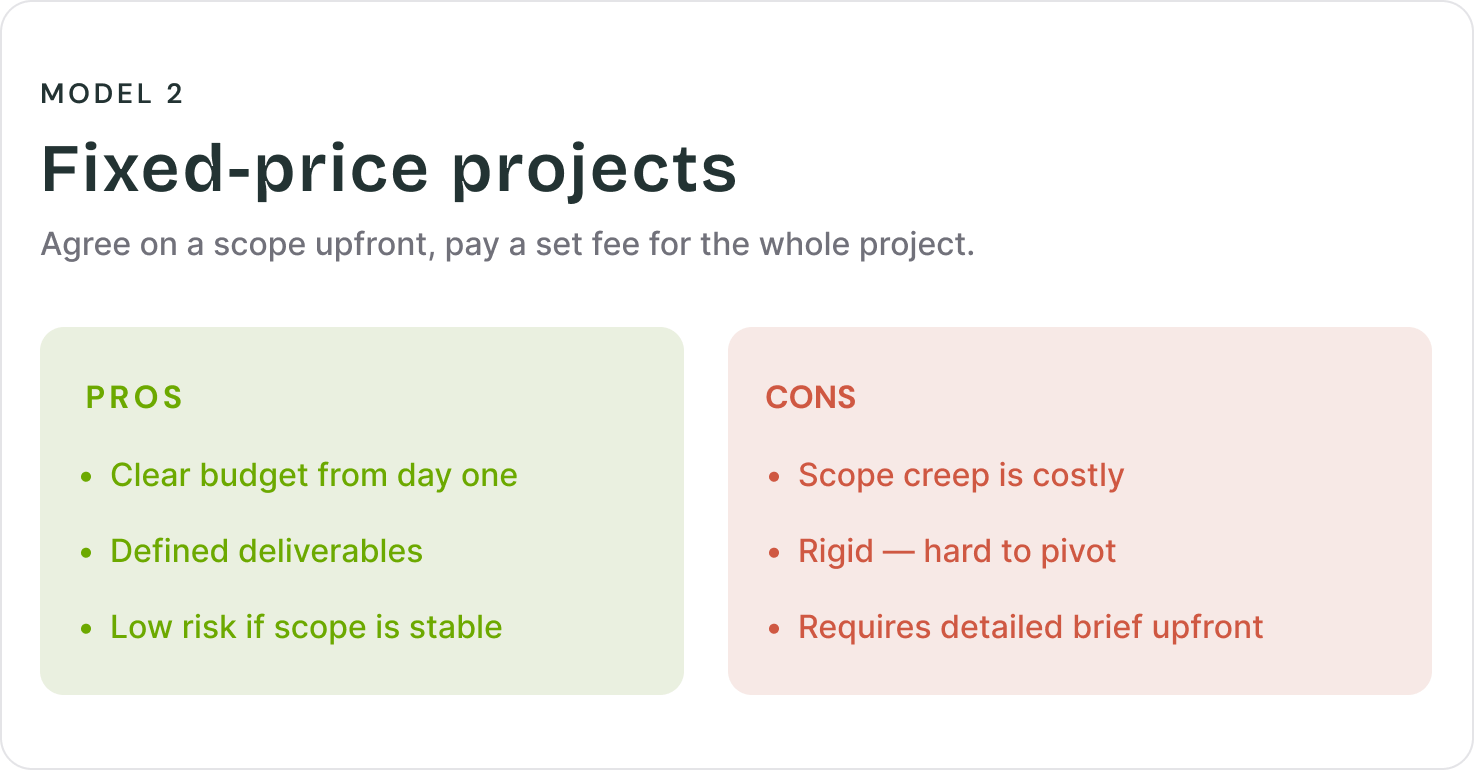
Fixed pricing is popular because it feels safe, but there's something most designers and agencies don't tell you upfront: fixed-price quotes almost always include a hidden buffer — extra margin built in to protect against revision cycles, unclear briefs, and scope creep. You're paying for risk insurance, whether the risk materialises or not.
And here's what makes that even less favourable for clients today: with the rise of AI-assisted design tools, experienced designers can work at a pace that simply wasn't possible a few years ago. Layouts, ideations, and iterations that once took days can now be turned around in hours. That efficiency gain rarely gets passed back to you in a fixed-price model since the quote was locked in before the work began, and the buffer doesn't move.
In a fixed-price model, you're often paying for time that was never actually spent — buffer built in for worst-case scenarios
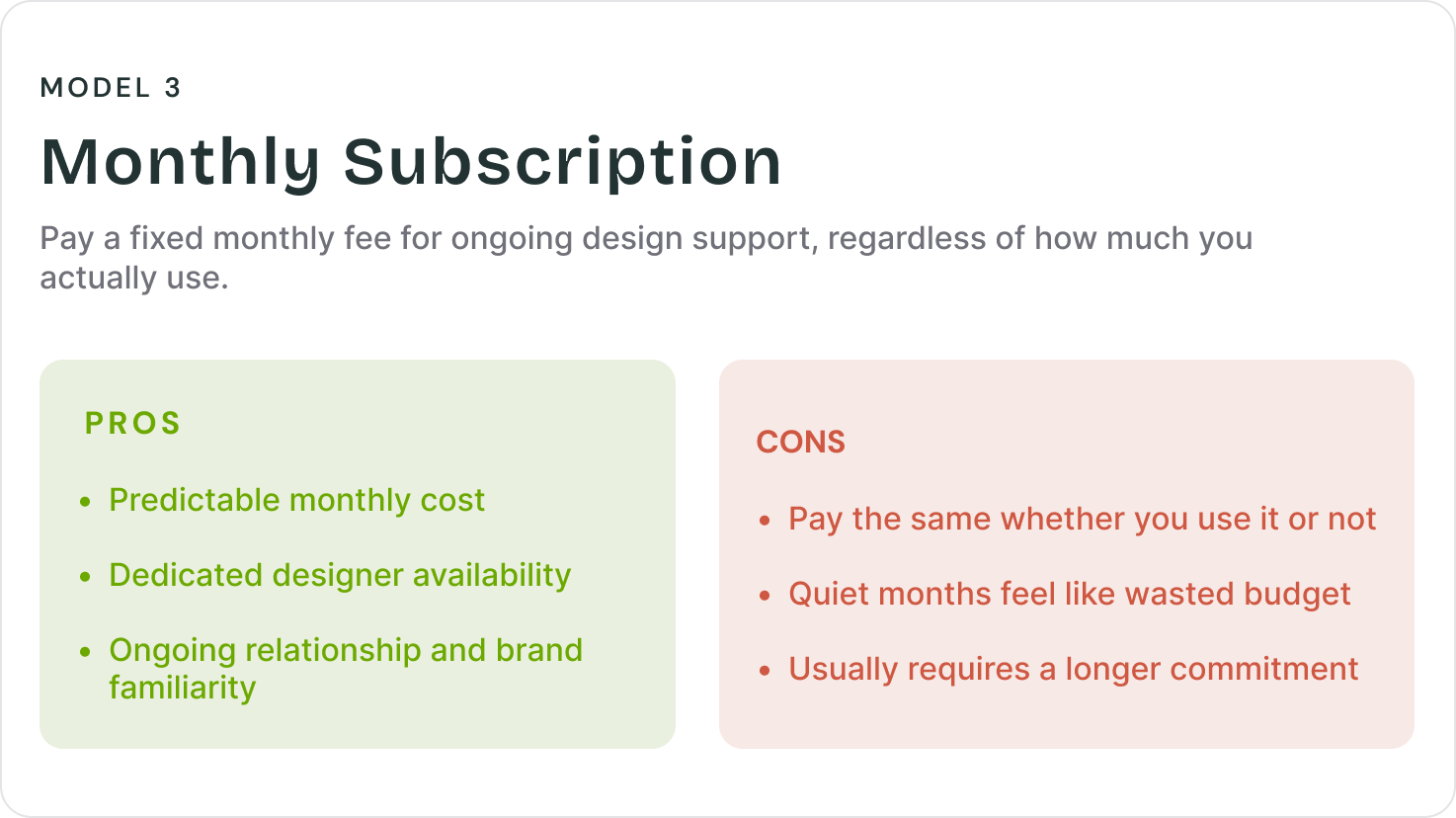
A monthly retainer model, or in more modern terms, a subscription model offers the benefit of having a dedicated designer on standby, making ongoing support simple and predictable, which sounds ideal, until you hit a quiet month and realise you've paid full price for very little. The fixed fee doesn't flex with your workload, so you're either scrambling to fill the hours or watching budget drain away unused.
For businesses with relatively stable or ongoing design demand, this model works well, but for those with more variable needs, flexibility-based options such as hourly packages may be a better fit.
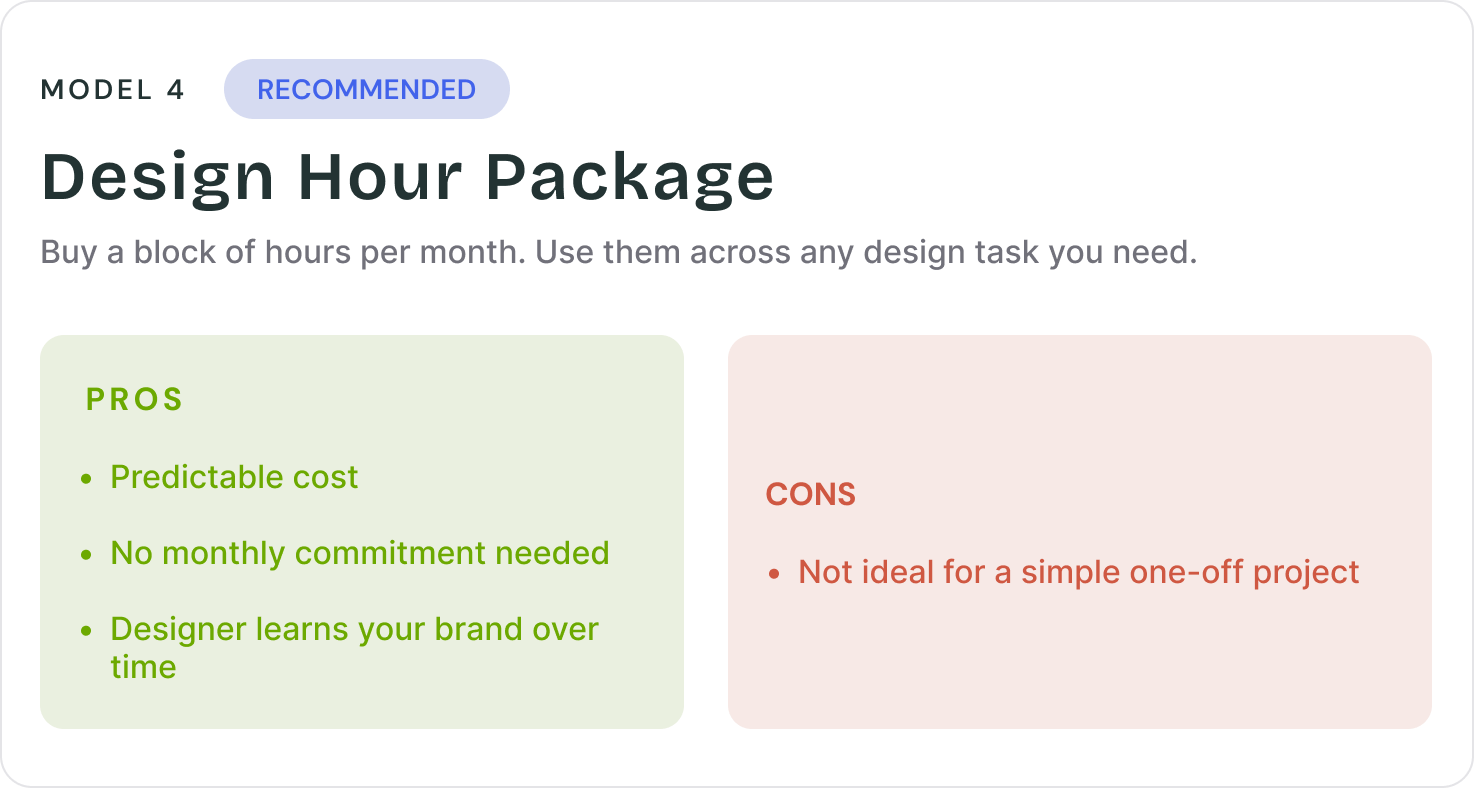
The Design Hour Package model works differently. Instead of fixed project quotes or tracking every minute, you purchase a block of hours and use them as your business needs evolve—whether it’s a landing page this week, a brand refresh next week, or social assets after that. The scope stays flexible, while the cost remains predictable.This model also reshapes the working relationship. Rather than onboarding a new designer for each project, you collaborate with the same designer who already understands your brand, tone, and goals. Over time, this familiarity compounds—briefs become clearer, feedback cycles faster, and the quality of work continues to improve.
For businesses with ongoing design needs, a Design Hour Package isn’t just more convenient—it delivers stronger long-term value.
A design hour package gives you the advantage of a retainer and the flexibility of hourly billing — without the downsides of either.
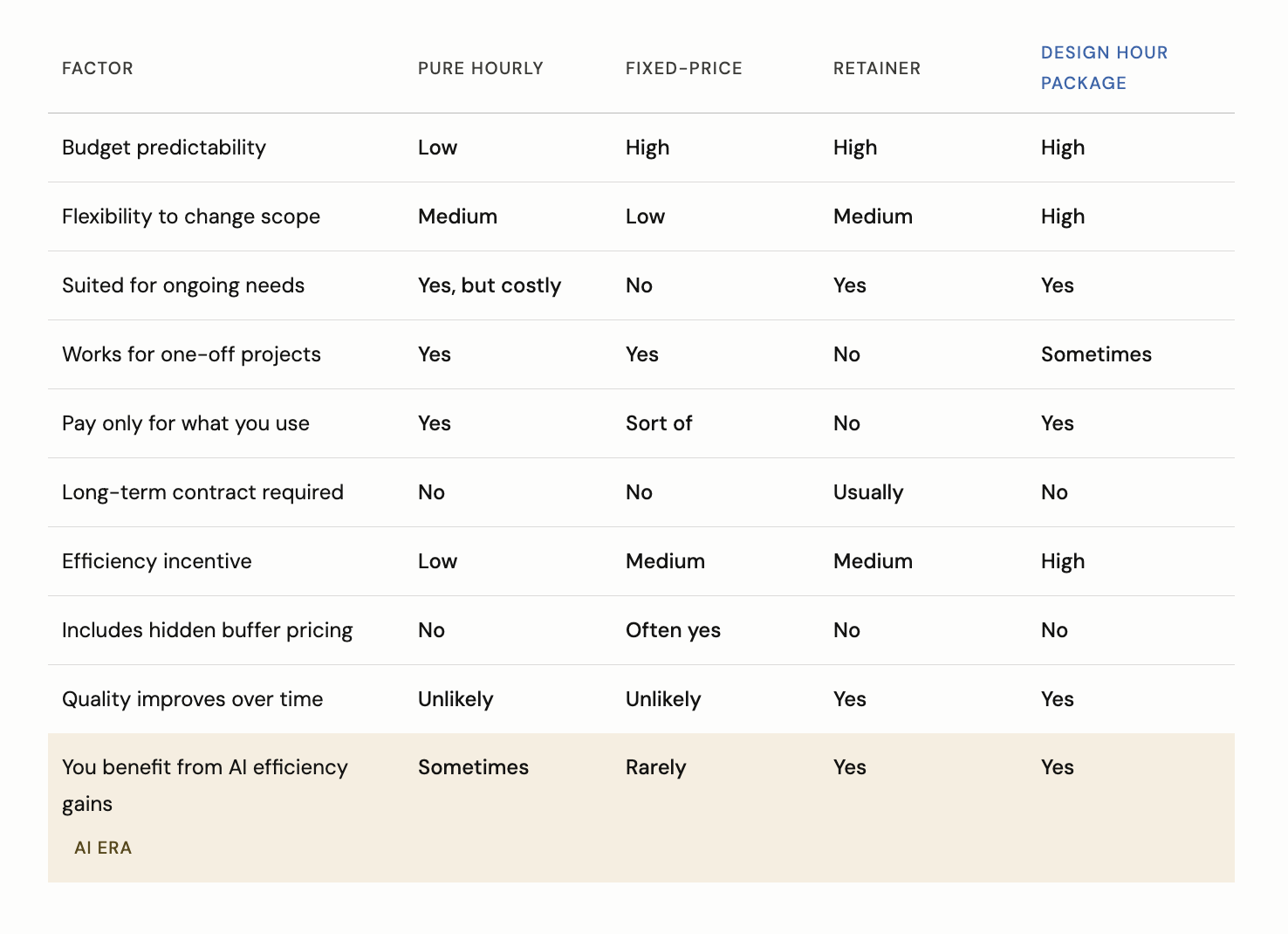
2. At a glance: how they compare
So, which model is right for your business?
The honest answer depends on your situation:
• One clear, defined project with a stable brief? Fixed-price is fine, but just know the quote likely includes buffer.
• A quick one-off task where commitment feels like too much? Pure hourly works.
• Want a dedicated designer that is always stand by? A monthly retainer has its place.
• Ongoing design needs with a workload that varies month to month? A design hour package gives you a dedicated designer with flexibility and predictability.
The biggest mistake growing businesses make is treating design as a series of one-off projects. Your brand and product evolve constantly — your design support should too.
What to look for in a design hour package?